Do I Need a Nightguard or a Sports Mouthguard? How Dentists Match the Guard to Your Goal
September 25, 2026 9:00 amA nightguard and a sports mouthguard may look like close cousins, but they are built for very different kinds of pressure. One has to handle hours of steady clenching or grinding while you sleep. The other has to stay secure through running, talking, heavy breathing, falls, collisions, and the occasional elbow or ball to the mouth.
At River City Dental in Fort Smith, Arkansas, Dr. Peyton Aven and Dr. Emily Steininger can help you choose the right guard for the way you will actually use it. Maybe you are waking up with a tired jaw, noticing worn edges on your teeth, replacing chipped fillings, or getting ready for another sports season. The fit, thickness, and material should match the kind of force your teeth are facing.
What a Nightguard Protects Against
Grinding and clenching create slow, repetitive pressure. You may squeeze your teeth together for long stretches without realizing it, especially while you sleep. Over time, that pressure can flatten enamel, chip edges, crack fillings, strain crowns, and leave your jaw feeling worn out before breakfast.
Some people know they grind because a spouse can hear it. Others notice that their teeth feel tender in the morning, their jaw is tight when they first open, or the same dental work keeps taking a beating. We may also see shiny wear spots, shortened edges, or small fractures during an exam before you have connected any of it to grinding.
A nightguard gives the teeth a protective surface to grind against and helps spread pressure across the bite. Deep grooves, rough patches, or thin areas can develop in the guard over time, especially where you grind hardest. Those worn spots can show how much force the appliance has been absorbing overnight.
What a Sports Mouthguard Protects Against
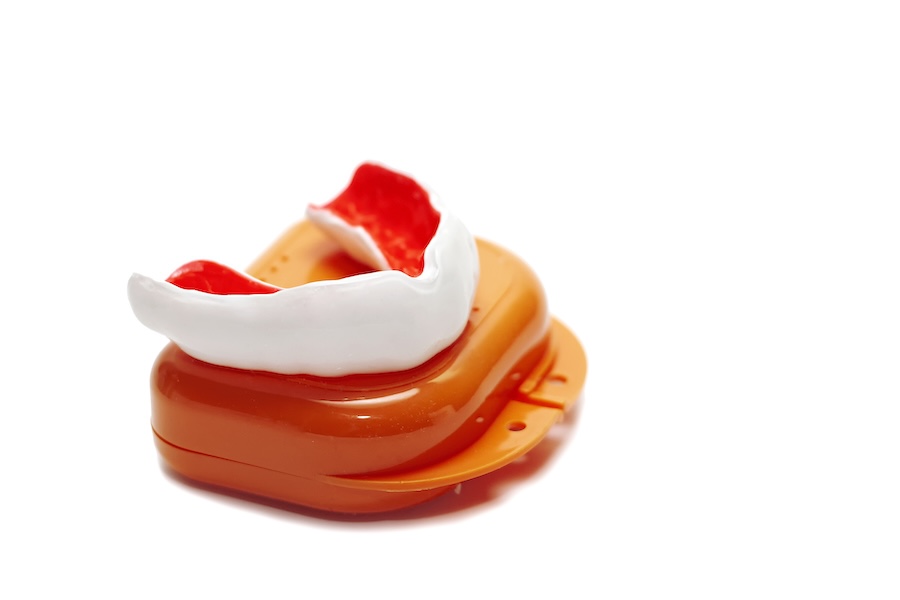
A sports mouthguard deals with sudden impact. It may need to cushion the teeth during a fall, collision, hit from a ball, or contact with another player. At the same time, it has to stay secure while you are breathing through your mouth, moving your jaw, and calling to teammates.
If you have to keep biting down just to hold the guard in place, it gets tiring quickly. Before long, it may be chewed between plays, pulled out to talk, or hanging halfway out of the mouth while the game keeps moving. A close fit makes it much easier to leave the guard where it belongs.
Sports guards are useful for more than football or hockey. Basketball, soccer, wrestling, skateboarding, baseball, and other activities all come with the possibility of a hard fall or hit to the mouth. A good mouthguard can protect teeth during the kind of split-second accident you never see coming.
Custom vs. Boil-and-Bite Sports Guards
Boil-and-bite guards are inexpensive, easy to find, and can work well for some athletes. You soften the material in hot water and mold it around the teeth at home, so the final fit depends a lot on the guard and how carefully it is shaped. If it ends up loose or bulky, you may have to clench to keep it in place.
That can get old fast for kids who are already trying to listen to a coach, run a play, breathe hard, and remember where they are supposed to be. A custom sports guard is made from the shape of the athlete’s own teeth, so it can sit closer and stay in place with less effort. That closer fit can also make speaking and breathing easier during play.
For some athletes, a boil-and-bite guard is perfectly workable. For others, especially those who keep chewing through them or cannot keep them seated, a custom guard is a better fit. Dr. Aven or Dr. Steininger can help you decide which route makes the most sense.
When Kids Need a New Sports Guard
A sports guard that fit well last season may feel completely different this year. Kids lose baby teeth, permanent teeth erupt, and the arches keep changing as they grow. A newly erupted molar alone can make last season’s guard sit differently.
A guard that once slipped into place easily may start feeling tight, sit crooked, or leave sore spots along the gums. Your child may also start biting down constantly just to keep it from moving. If that starts happening, the fit needs another look.
For younger athletes, checking the mouthguard at the beginning of each season makes sense. It is much easier to replace an outgrown guard before the first game than to discover during warmups that it no longer seats over the teeth. Bringing the guard to a regular dental visit is an easy way to have the fit checked.
Sports Mouthguards With Braces
Braces make the fit a little more complicated because the guard has to cover the brackets and wires while leaving room for the teeth to keep moving. A well-fitted guard can also cushion the lips and cheeks if there is a hit to the mouth. The trick is giving the braces enough space without ending up with something so bulky that the athlete hates wearing it.
For some kids, a boil-and-bite guard made for braces can work well temporarily, especially while the teeth are changing quickly. Others may do better with a custom or orthodontic mouthguard that is shaped with extra room around the brackets. River City Dental can help you choose based on the stage of treatment, the sport, and how quickly the mouth is changing.
The fit may also need to be checked more often during braces. A guard that worked comfortably a few months ago can start feeling tight as the teeth move. If it begins pinching, rocking, or sitting crooked, it is probably time to replace it.
When Jaw Pain Needs a Closer Look
Morning jaw soreness often shows up alongside clenching or grinding, but several things can leave the area sore or tired. A cracked tooth, a crown taking too much pressure, uneven bite contact, or irritation around the jaw joint can all add to the discomfort. That is why the exam goes beyond simply asking whether you grind.
Dr. Aven or Dr. Steininger will look at the teeth, bite, jaw, and existing dental work before deciding what kind of guard makes sense. Flattened front teeth, repeated chips on one side, or fillings that keep breaking in the same area can show where extra pressure is landing. Those wear patterns can also help shape the guard around the way your mouth actually functions.
If grinding is wearing on the teeth, a nightguard can give them a break from hours of direct pressure. If the soreness is tied to a cracked tooth, an irritated joint, or one spot in the bite taking too much force, that area may need treatment too. The point is to match the guard to what is actually happening in your mouth.
Why Sleep and Sports Usually Need Separate Guards
One stays by the bed, and the other goes into the sports bag—but why? A nightguard is built around hours of steady pressure from clenching or grinding, while a sports mouthguard is made to cushion a sudden hit and stay put while you are moving. Those jobs call for different thicknesses, shapes, and materials.
A nightguard is shaped around your bite and where you tend to carry pressure. A sports mouthguard needs more room for cushioning and has to stay secure when you are breathing hard, talking, and moving your jaw. If you grind your teeth and play sports, having one of each gives you protection that actually fits both situations.
It also makes replacement more straightforward. A nightguard may wear down in the exact spots where you grind hardest, while a sports guard may need replacing because of growth, braces, chewing, or heavy use. Each one gets checked based on the wear and fit that make sense for its job.
When an Old Guard Needs to Be Replaced
Bring your current guard to dental visits, especially if it has started feeling different. A nightguard can develop deep grooves, rough areas, cracks, or spots that have become noticeably thinner. Sports guards can stretch, warp, get chewed up, or stop fitting as the mouth changes.
Dental work can alter the fit too. A new crown or filling may make an older guard feel tight in one spot or keep it from seating all the way. If you suddenly have to force it onto your teeth, stop wearing it until we can check the fit.
Heat can warp the material as well, so wash guards with cool or lukewarm water and keep them out of hot cars. Once the shape starts changing, the guard may rock, pinch, or stop seating the way it used to. At that point, replacement usually makes more sense than trying to make a worn-out guard behave.
Custom Nightguards and Sports Mouthguards at River City Dental in Fort Smith, AR
A nightguard may spend eight hours taking pressure from grinding teeth, while a sports mouthguard may only need to do its hardest work for one split second. Both have to fit closely enough to stay comfortable and actually get worn. The details of that fit look different depending on what you are asking the guard to handle.
Dr. Peyton Aven and Dr. Emily Steininger can check for grinding wear, jaw soreness, old dental work, braces, growth changes, and the demands of the sport you play. River City Dental offers custom nightguards and sports mouthguards, and we can also check an older guard that has started feeling tight, loose, or worn down. If you already have one, bring it with you so we can see how it is fitting now.
If your jaw is tired every morning, your teeth are showing wear, or another sports season is about to start, schedule a visit with River City Dental in Fort Smith. We’ll help you get the right guard for the job and make sure it feels comfortable enough to stay where it belongs!
CONTAct us