Implant Restoration Care: How to Clean Around the Implant Crown and Keep Gums Healthy
October 9, 2026 9:00 amOnce an implant crown feels familiar, you may realize you’re chewing on that side again without moving every bite across your mouth. However, plaque still collects where the crown meets the gum and in the spaces beside it. Implant restoration care protects those supporting tissues, because inflammation can damage the gum and bone even though the crown itself can’t get a cavity.
Flossing around a new implant crown may feel different from flossing around the tooth it replaced. At River City Dental in Fort Smith, Arkansas, Dr. Peyton Aven and Dr. Emily Steininger provide implant restorations and check the surrounding tissues during follow-up care. If the usual flossing motion feels awkward around the crown, we can demonstrate how to reach its sides without forcing the tool into the gum.
Cleaning Where the Crown Meets the Gum
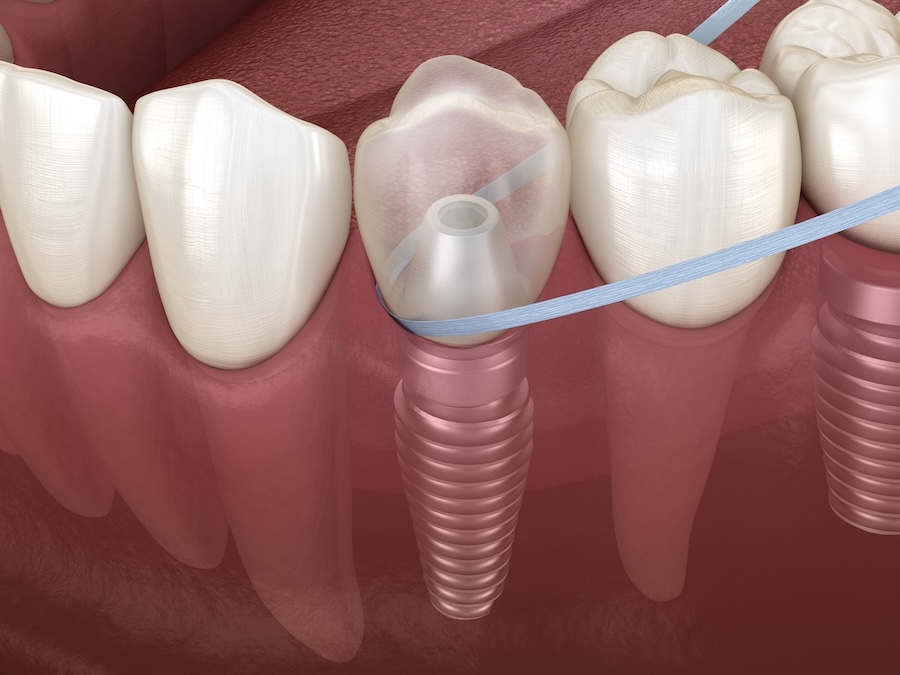
Beneath an implant crown, a connecting piece joins the visible tooth to the implant in the bone. The gum surrounds the point where that restoration comes into the mouth. Plaque can gather along that edge even when the crown looks clean above it.
Brush twice daily with a soft toothbrush, taking time along the gumline rather than sweeping over the chewing surface alone. A gentle angle helps the bristles reach the edge without scrubbing the tissue. We can demonstrate the technique around your restoration if you’re uncertain where to aim.
Fluoride toothpaste still protects the natural teeth beside your implant crown. Use the products we recommend for your mouth and restoration, and keep the pressure gentle around the gum. Scrubbing harder or choosing an abrasive cleaner can irritate the tissue or scratch restorative surfaces.
Clean Both Sides of the Implant Crown
Along with the gumline, the sides of the implant crown need daily plaque removal. Floss may work well in one space, while an interdental brush or water flosser may be easier around another. The tool needs to fit the gap and reach the surface without scraping or forcing its way through.
If you use floss there, guide it gently through the contact and along the sides without snapping it into the gum. Floss that keeps catching or shredding may be hitting a rough edge or tight contact. We can check that spot and demonstrate a different angle or tool if the space is hard to reach.
The little brush that slips easily between two back teeth may be too large beside your implant crown. Choose the size we recommend, and let it pass through gently rather than pushing it against the gum. If a water flosser is easier for you to handle, we can show you where to aim it around the restoration.
Cleaning Under an Implant Bridge
If your implants support a bridge, the spaces beneath the replacement teeth need additional care. Food and plaque can collect under those teeth even though you can’t pass ordinary floss down between them. A floss threader, specialized floss, or another interdental tool may help reach beneath the bridge.
Because bridges connect several replacement teeth, ordinary floss can’t pass down between each one. Instead, a threader or another recommended tool guides the cleaner beneath the bridge so it can reach the underside and nearby implant surfaces. Practicing with your bridge during the visit helps you find the openings and choose a tool you can handle at home.
If the tool keeps missing the same area, changing its size or the angle may improve access. Sometimes the bridge design itself needs review to see whether plaque is collecting in a space you can’t reach. If you keep missing that spot despite trying a different tool, we can check whether the shape of the bridge is blocking access and explain what could improve it.
Why the Gum Around an Implant Bleeds
Plaque bacteria can trigger the body’s defenses around an implant, leaving the gum red, swollen, or prone to bleeding. When that inflammation stays in the soft tissue without supporting bone loss, we call it peri-implant mucositis. Professional cleaning and improved daily plaque removal can often help the tissue recover.
If inflammation also involves loss of the bone holding the implant, the condition is called peri-implantitis. The gum may look similar at first, so bleeding alone can’t show how much support has changed. We use the examination and imaging to assess bone levels and determine whether further treatment is needed.
If the gum keeps bleeding, looks swollen, or develops drainage or a bad taste, we need to check it even if chewing still feels comfortable. Unless we’ve given you different instructions after treatment, continue cleaning gently so plaque doesn’t keep collecting there. At the visit, we can examine the gum and check the bone beneath it to see how far the inflammation has spread.
Movement Can Come From the Restoration
A little click at dinner can make you notice an implant crown you had almost stopped thinking about. That movement may come from a loose connection while the implant itself remains firm in the bone. Even if it only moves slightly, have it checked before chewing puts more pressure on the connection.
If the crown comes off, keep it in a secure container and contact us. Avoid chewing on that area while waiting for instructions. Household glue can damage the restoration and tissues, so don’t try to attach it yourself.
If the crown’s connecting screw or another component has loosened, repairing that connection may restore stability. However, the implant itself should remain firm in the bone. If the implant itself moves, we need to check the bone holding it and may involve the clinician who placed it. Tightening the crown won’t correct a problem with that support.
Follow-Up Visits and Implant Health
During follow-up visits, we check the gum around your implant and make sure the crown and its connection are stable. We also remove buildup from places you can’t fully reach at home and use X-rays when needed to compare the supporting bone. If you’ve had inflammation or bone loss, we may recommend shorter intervals between visits to keep those areas clean and watch for further changes.
A history of gum disease, smoking, and diabetes can increase the risk of inflammation and bone loss around implants. Because diabetes and changes in oral health can affect healing, updated health and medication information helps us plan monitoring. Dry mouth or difficulty reaching the crown may also mean changing the cleaning tools or preventive care.
If you clench through a stressful afternoon or grind at night, that pressure reaches your implant crown as well as your natural teeth. If we recommend a protective appliance, its fit should be checked after new dental work. Bring the appliance to visits when the bite or restoration is being evaluated.
Implant Crown Maintenance in Fort Smith
If floss keeps catching beside your implant crown or the gum bleeds during cleaning, bring those concerns to your next visit. Dr. Aven and Dr. Steininger can check the connection, examine the tissue, and help you reach the awkward spaces around the restoration. Schedule with River City Dental in Fort Smith, Arkansas, and let’s keep that replacement tooth comfortable for the meals ahead!